
What you will find here
What is a PMO, what are its functions and why is it strategic for companies? See how organized project management drives results.
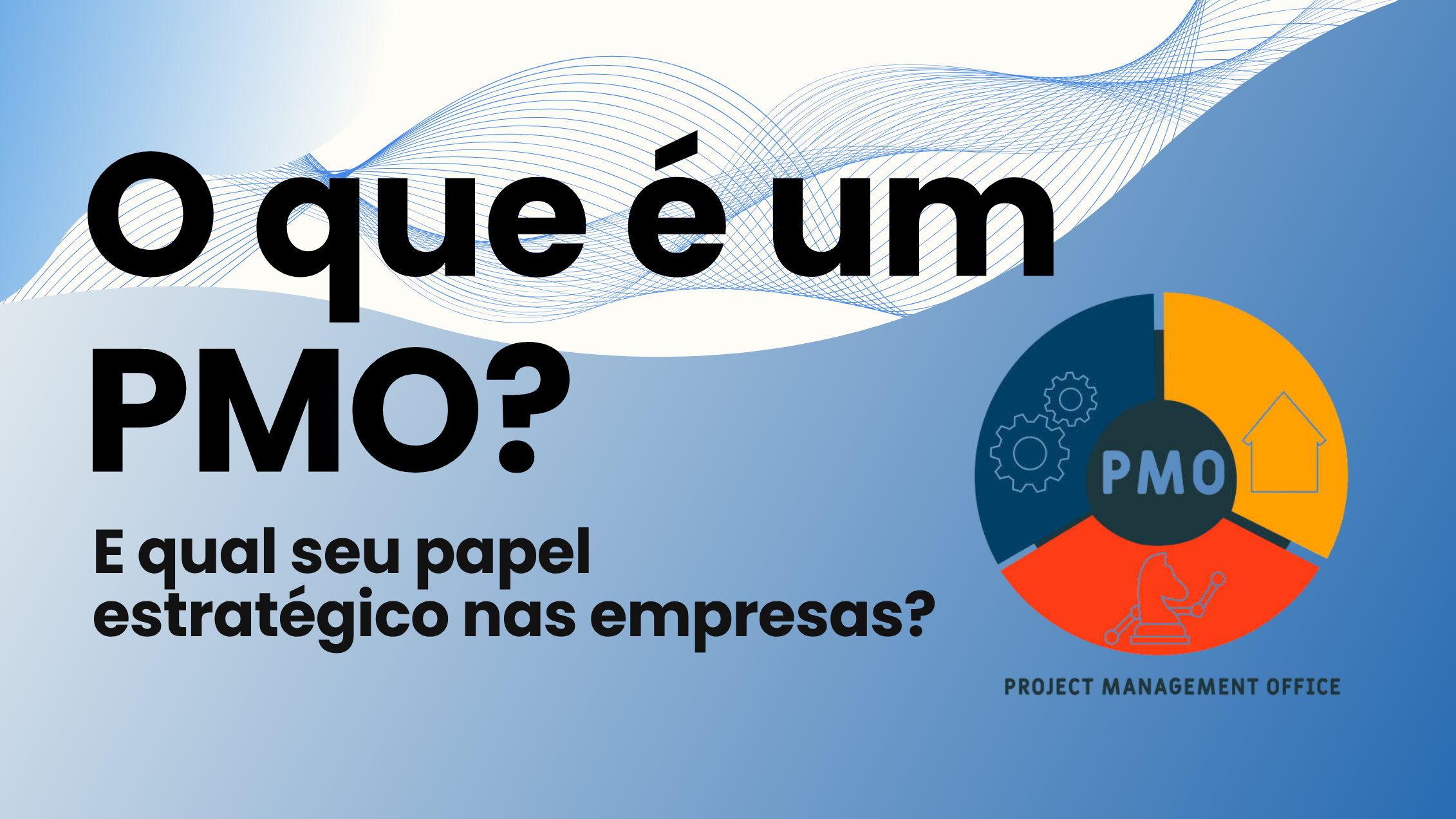
Understand the concept of PMO, its functions, types and how this structure impacts the strategy and results of companies.
The acronym may seem complicated at first sight, but the PMO is increasingly present in modern companies. Understand what it is, what it does and why it can be decisive for the success of any organization.
01What is a PMO?
PMO. Three letters that can change the course of your company. But what does that mean anyway?
PMO comes from Project Management Office – in Portuguese, Office of Project Management. The PMO has a real strategic role: to ensure that projects move in an organized manner, within the deadline and budget, and bring concrete results to the business.
Think of all the initiatives a company plays at the same time: new products, internal changes, marketing campaigns, expansion of units. Without someone or some structure to coordinate all this, the risk of delays and waste is enormous. This is where the PMO enters, creating processes, metrics and a centralized view.
More than a bureaucratic sector, PMO acts as a bridge between the company's strategy and day-to-day execution. He organizes, accompanies and measures each project. This means that the board can make decisions based on reliable data, not just “achisms”.
Companies seeking to grow sustainablely look at PMO as something strategic, not optional. He not only organizes the processes, but helps to implement project management in your company in a structured way, connecting planning to execution.
02What does a PMO do within organizations?
Now that we know where the idea came from, it is time to understand in practice what a PMO does within companies.
The short answer: it ensures that projects actually happen. It seems obvious, but how many initiatives have you seen start with excitement and die halfway? The PMO is there just to avoid such waste.
The project office centralizes information, sets standards and follows the progress of deliveries. Thus, all work in the same direction, without rework or conflicts of priority. In addition, PMO monitors costs, deadlines and quality, allowing quick adjustments whenever necessary.
But it's not just about control. The PMO also supports teams by offering methods, tools and training that facilitate daily life. Instead of each area inventing a different process, there is a unique model, thought to be efficient and replicable.
03Practical daily assignments
In everyday life, PMO acts on several fronts that directly impact the fluidity and success of the projects. Among its main tasks is the responsibility for Standardize documents, reports and workflows, creating a solid and replicable basis for different initiatives within the company.
Another important role is to offer strategic support managers and teams, helping to choose the most appropriate methodologies for each type of project.
In addition, PMO follows the risks Each initiative and guarantees the alignment the projects with the company strategy, ensuring that the time and resources invested are connected to the biggest objectives of the business.
In practice, PMO works as a radar. It identifies problems before they see crises, creates visibility about what is in progress and gives security for leadership to decide.
04Types of PMO: Which model is ideal for each company?
Not every PMO is the same. In fact, there are different formats that vary according to the level of involvement in project management. The choice depends heavily on the size of the company, the maturity in project management and even the sector of activity.
Support PMO
Acting as a guidance counselor, offering templates, training and tools to the teams. It is ideal for companies that are starting to implement project management and need a simple structure that encourages good practice without imposing many rules.
PMO control
Defines standards and requires teams to follow specific processes. He reviews reports, he charges indicators and see if the projects are aligned to what was planned.
This model is interesting for companies that already have a certain maturity in project management and need to ensure consistency in deliveries. The focus is on discipline and compliance.
PMO directive
In the steering model, PMO not only guides and controls, but also assumes direct management of some projects. In other words, PMO leaders can make strategic decisions, allocate resources and even set priorities. It is a common choice in larger organizations, where the volume and complexity of projects require centralised coordination.
05When and why invest in a PMO?
A lot of people think: “Does my company already need a PMO or is it early?” The answer depends on some very clear signs.
Having a project office is not luxury, it is a necessity when the amount and complexity of initiatives begin to disrupt the results. If managers spend more time extinguishing fires than planning the future, maybe the moment has come.
Signs that your company needs a PMO
When projects are delayed without a clear explanation, costs get out of control, and teams do not communicate efficiently, the scenario tends to get chaotic. The lack of transparency between managers and the constant change of priorities without defined criteria indicate that a central structure to organize deliveries is missing.
If these symptoms are part of your company's routine, it's very likely that a PMO is the necessary support to bring clarity, alignment and efficiency project management
Advantages for growing companies
Growing companies often miss even more organization. It's when new projects appear at all times and the team needs to run to handle everything. In this scenario, PMO acts as a kind of compass: directs the team, gives clarity about what is priority and reduces waste.
And the best: besides bringing control, the PMO also Hurry up.. This is because, when there are clear processes and continuous monitoring, projects flow faster. The company ceases to spend energy on rework and begins to reap the fruits of project management and its benefits.
In the end, investing in a PMO is thinking about the long term. It is like preparing the ground before building: it gives more work in the beginning, but guarantees a firm base to grow up.
06The difference between companies with and without PMO
PMO is not just an organization tool, but a competitive differential. Companies that rely on this structure manage to align their projects to strategy, reduce risks and, mainly, gain speed in decision-making.
While some organizations still rely on endless meetings to understand what is happening, those with PMO already have dashboards, reports and clear indicators by hand.
07Impact on performance and competitiveness
A study by PMI (Project Management Institute) showed that companies with PMO have superior performance in deadlines, costs and quality. This is because there is a dedicated structure to ensure that strategic objectives are respected in each initiative.
In practice, it means that the company succeeds do more with less. Projects are no longer just isolated tasks and become part of a well-planned portfolio, who prioritizes what really brings feedback.
08How PMO Drives Innovation
Another interesting point is that PMO is not limited to “fiscalizing”. By creating organized processes, it frees teams from operational mess, making room for new ideas.
Companies that can test, miss fast and learn safely come out in front. PMO creates exactly this environment: gives the rules of the game, but also guarantees flexibility to explore new possibilities.
09How about you take the next step?
If you've come this far, you've noticed: having a PMO can transform how your company runs and delivers projects.
It is not a question of bureaucracy, but of strategy. And the sooner this structure is present, the faster you feel the positive impact on the results.
Na MLPro, we are experts in optimizing project management processes in companies. More than 20 years ago, we helped organizations from different ports implement solutions, always focusing on agility, clarity and results.
Want to see in practice how PMO can change the game? Talk to MLPro and find out how to turn project management into a real growth engine for your business.
Original content from the MLPro editorial library, fully preserved and translated for the English website.