
What you will find here
Learn how the MLPro project QA report helps review data quality and identify inconsistencies in project information.
In project management, more and more agility is needed to identify the project's GAPs and thus take corrective action to ensure that the project follows in accordance with the initial planning.
In addition to the use of Microsoft Project, the project manager uses custom reports to have greater visibility of the project situation and thus be able to act whenever necessary.
We know that many times, due to the volume of activities, not always the project team or even the project manager can update the information or fill it out correctly, and this can cause problems in the control and monitoring of the projects.
To help in project management and resolve this issue, there are Quality Assurance (QA) reports that may indicate where there are flaws in the pointing of information in the projects, allowing those responsible to identify what needs to be corrected to ensure the quality of information.

In this article we will talk about the importance of the QA Report in project management and the main benefits of its use.
01What is Quality Assurance?
We can say that originally Quality Assurance (QA) is a set of activities aimed at ensuring quality in system development processes.

QA activities focus on prevention of defects related to software development processes.
Since we are not dealing with the development of systems, we will consider that the activities of QA will be focused on ensuring the quality of information pointed out in the projects, so that the data are correct and thus maintain the their reliability.
When we talk about projects, we have a multitude of information that can be released incorrectly or even that may not be properly updated.
In addition to following internal standards and procedures, the project team must keep the schedule of activities updated so that the Project Manager always has the correct view of the information.
We may have, for example, projects that were launched without baseline, preventing an analysis of project deviations. In addition, we may have delayed tasks that were not performed or tasks with inactive resources, thus generating inconsistency of information.
There are critical activities that, if delayed, can compromise the progress of the project generating delays in the schedule or even negative financial impact on the project. Due to the importance of these activities, it is essential to have the visibility of their expected start and end dates. In addition, we can register risks and/or problems that need to be foreseen to be treated during the execution of the project.
In order to identify any inconsistencies in the releases and notes of the information, there are audit reports that aim to facilitate the identification of these inconsistencies, so that the project manager can guide the project team or correct the incorrect notes.
02Project Audit Types
Audits on projects may be internal or external. Internal audits are carried out by employees of the company who have the responsibility to evaluate and analyze the internal systems of the company and report the results of the analysis directly to the company board.
External audits are performed by an independent team, which is usually hired to analyze and evaluate the company's systems or projects.

Below are the main differences between audits:
| Internal | External |
|---|---|
| Internal Work Hand | External Work Hand |
| Lower Degree of Independence | Higher Degree of Independence |
| Focus on Internal Standards | Focus on Market Standards |
03Main benefits of QA reports
Among the many benefits of using the report, we can highlight:
- Greater ease of identification of project problems;
- Greater reliability of information for decision making;
- Standardisation of information input;
- Improve project performance;
- Possible identification of the Project and responsible, allowing evaluation of the need for internal training;
- Increase adherence to the use of the project methodology within the company.
In addition to the benefits listed above, the QA report allows continuous improvement in project management processes by increasing maturity in managing the company's projects.
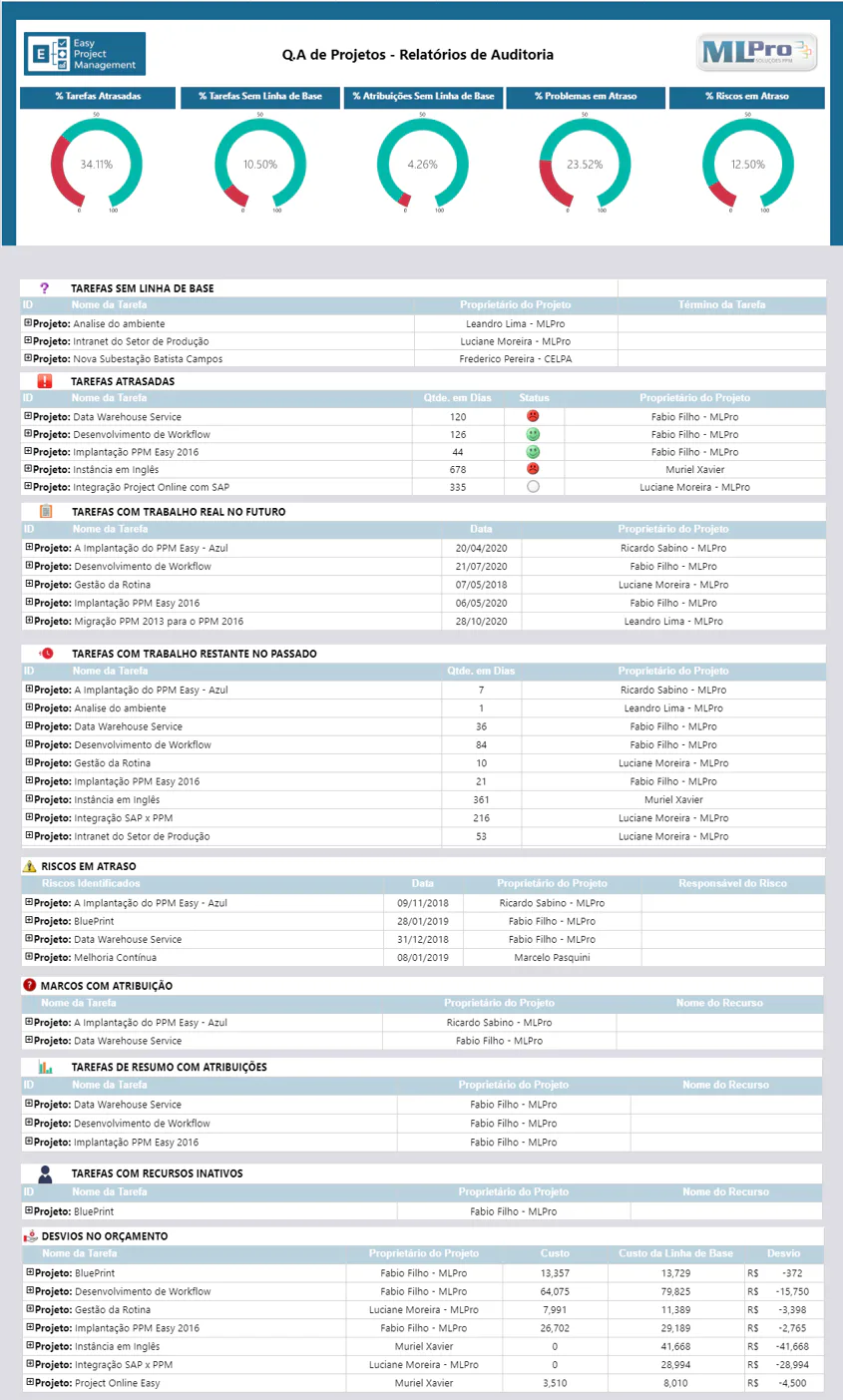
Contrary to what many professionals may imagine, the objective of the Project AQ report is to act in the prevention of problems regarding the statement of information and, if any non-compliance is identified, allow the project manager to guide the person responsible for the completion, since the report allows the visualization of the name and the person responsible for the project.
With the use of the Project QA Report developed by MLPro, the project manager has access to relevant project information and can follow if there are inconsistencies in the releases and thus take appropriate actions to solve each case.
To learn more about Project QA Reports, implementation of PPM solutions, Microsoft Project Online or Project Server migrations, please contact us.
Original content from the MLPro editorial library, fully preserved and translated for the English website.